Class Project
IAD - 3000


Wildscape
A packing app for naturists who dont know where to start.

Wildscape is not Your Ordinary Hiking App
Wildscape simplifies outdoor planning for beginner and casual adventures through personalized packing guidance, beginner friendly resources, offline maps, and engaging activities that make the outdoors feel more approachable.
Overview
Methodology
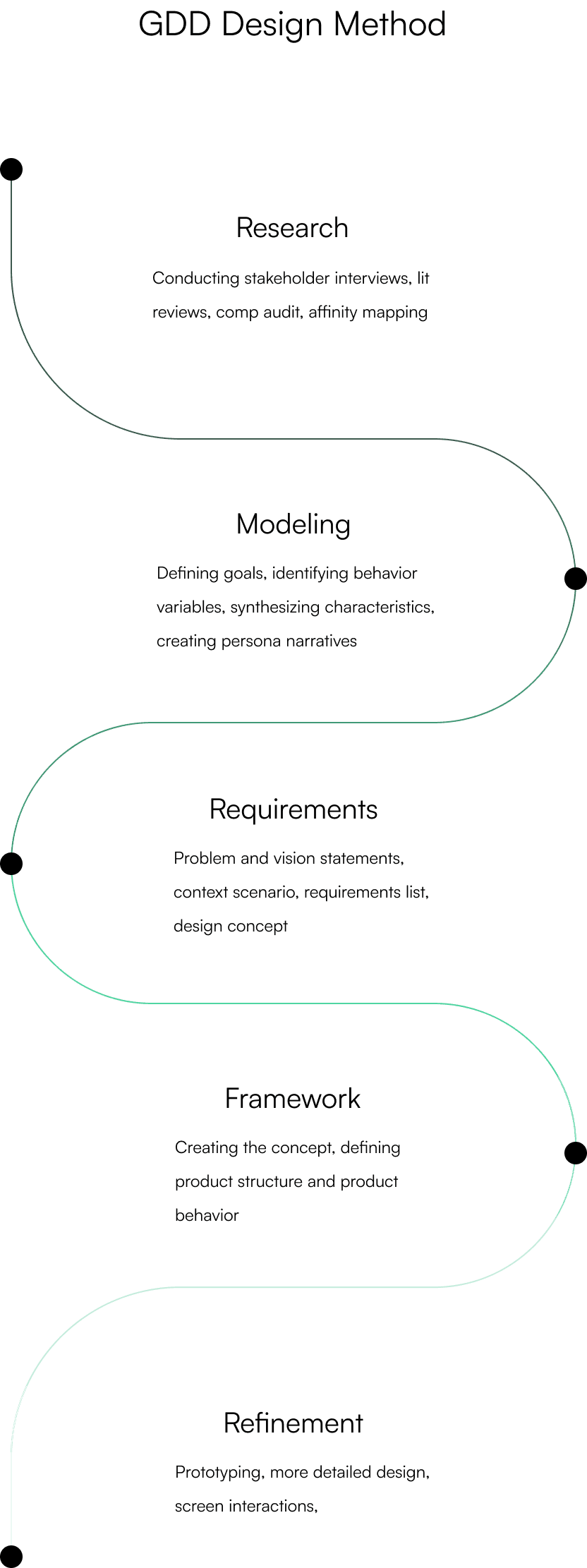
Goal-Directed Design
Duration
10 Weeks
Focus
Outdoor Planning
Roles:
Research, Interactions,
Facilitator,
Prototyping
Timeline:
Aug 2025 - May 2026
Tools:
Figma, Figjam, Teams, Zoom
Team:
Oscar Ding, Hajar Williams, Lucy Williams, Natsai Bhromoa
Designing for the Person Who Doesnt Know Where to Start
"How do we design an outdoor planning experience that makes the wilderness feel welcoming, not overwhelming?"
Most outdoor apps are built for the seasoned hikers, regular runners, and active outdoor hobbyists, Wildscape was designed for everyone else. In my Interaction Design 1 course, our team applied Alan Cooper's Goal-Directed Design (GDD) methodology to build a hiking app centered on the needs of beginners and casual adventurers who feel overwhelmed by the outdoors.
GDD grounds design decisions in deep user research before a single wireframe is drawn. The methodology is structured around understanding who your users are and what they're truly trying to accomplish.
Main Design Problems
Create a high fidelity prototype of a app using a interaction design method within a team environment.
Create a bridge between user needs, business objectives, and visual execution.
Solution 01
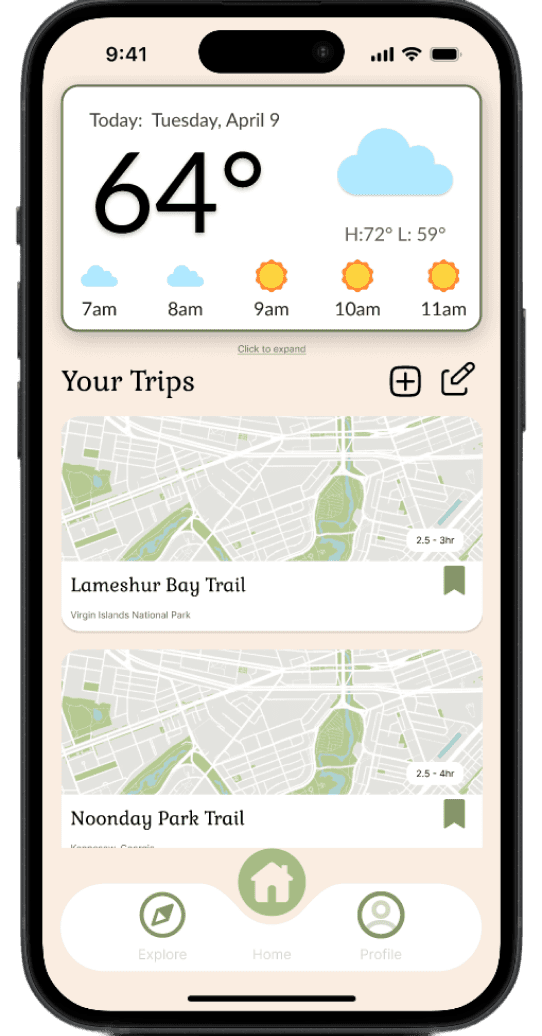
Designed a weather page on our main home screen that flows within the key pathway as a response to user interviews and literature reviews.
Through collecting out insights via affinity mapping, we found out that 4 out of 5 user interviews explained that checking the weather was the first process of planning any trip.

Solution 02
Created a customize feature within the packing list section based on feedbacks of other packing applications.
Via literature review, we found out that people travel for different purposes in different environments and packing apps cannot adjust or accommodate for these differing scenarios.


Solution 03
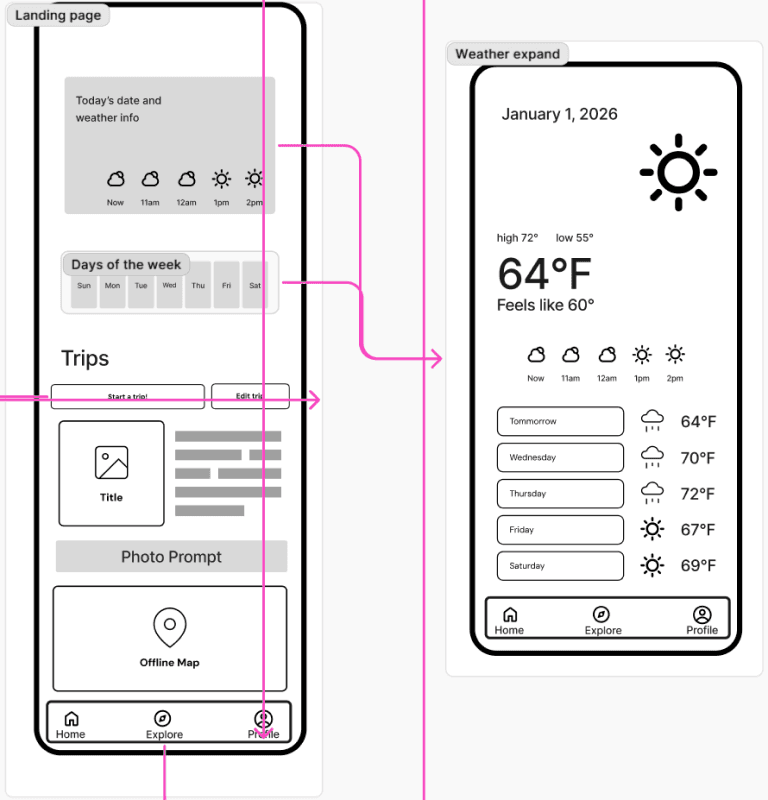
Created a low-fidelity wireframe to layout the basic design of our app.
Referenced the wireframe to start the basic design of the prototype and then iterated through multiple designs to get a final design.

Lessons Learned
Communication within a team environment is vital to having a coherence design. Working with different levels and mindsets of design work makes it hard to understand what you need to build and how that build should look.
I believe that we could have communicated better together to better understand what our app actually was. I also think we should have established how our app was going to look before we dove into actually making anything.
It took more time than it should have to go back and edit every text style and color style. If we established what things should have looked like before we made anything, it would have made designing a lot easier. Things being, what color cards are, what colors all buttons should be, what the corner radius of every curved component should be, etc.
Understanding spacing, placement, and size of different elements is instrumental to having a well looking and aesthetic design.
I still feel a bit uneasy about the spacing, placement, and sizing of buttons, interactable elements, and icons. I think that with more iterations, I would have shrunk everything down and create more whites pace to have a cleaner looking design.
Working faster and asking more questions is key to getting better iterations.
Getting comfortable with asking questions allows me to learn more about the context of the work required, the expectations of people like designers and stakeholders, and personal development. If I had to restart this project all over again, I would be asking 10 times the questions of my groupmates and professor.
10 Week Overview

GDD Design Method Reference